CHARACTER CLONING
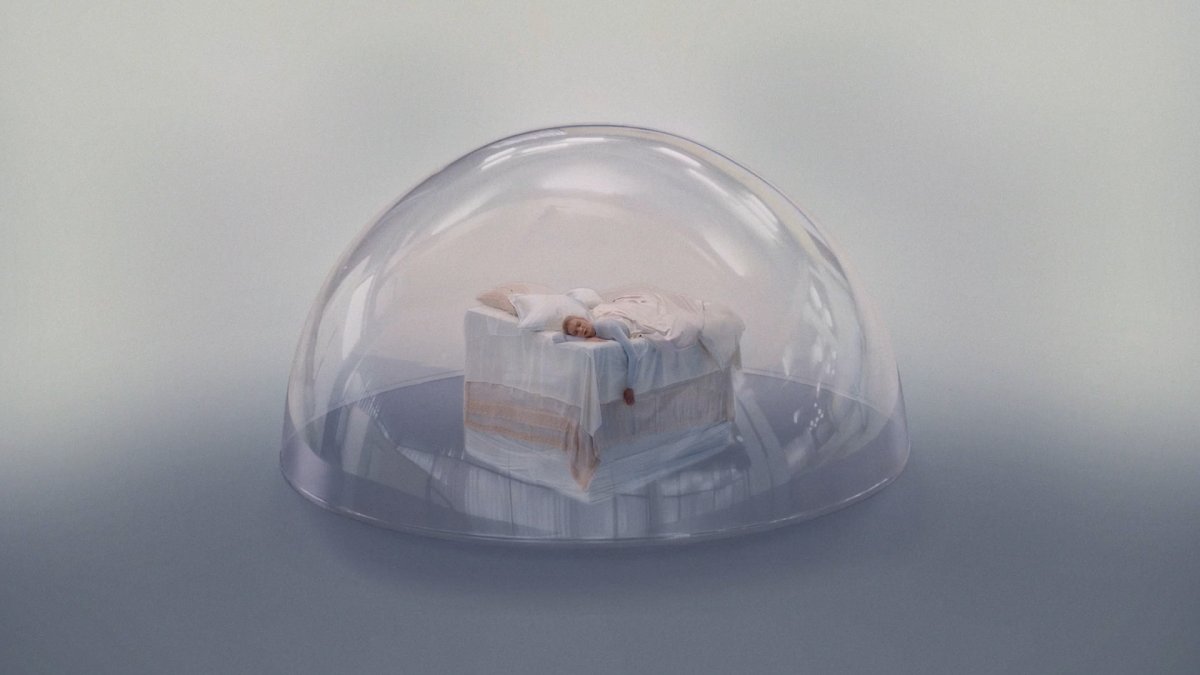
One actor. One scene. Multiple versions in frame. 100% identical camera passes enable seamless replication in post — no complex tracking required.
Our Bolt™ Jr+ motion control rig paired with the Phantom Veo 4K delivers high-speed shots at up to 1,000 fps in 4K, with millimetre precision and full repeatability.
Based in Berlin, we operate one of the most flexible motion control setups in Germany. Compact enough to fit through standard doorways, fast to deploy, and equally at home in our Kreuzberg studio or on location anywhere in Europe.
Every booking includes an experienced motion control operator. We also build the SFX and triggers needed to make things happen on cue in front of the camera — drops, splashes, releases, frame-accurate timing.
Need a different rig? Let's talk.

Nine techniques where motion control makes the difference.
One actor. One scene. Multiple versions in frame. 100% identical camera passes enable seamless replication in post — no complex tracking required.
Normal scale and miniature — in a single shot. The Bolt operator mathematically scales the camera path for a fluid, seamless size shift. Programmed in minutes, not hours.
A product range pops into frame one by one — every bottle, can, or pack landing exactly where it belongs. Each take aligns to 0.05 mm, so the layers composite into a single seamless shot.
Live action meets 3D — no manual tracking. The robot's XYZ data feeds directly into Unreal Engine, Maya, or Blender via FBX. Clean integration, no guesswork in post.
One shot, two speeds. Background in real time, product in slow motion. The camera move stays identical across 25 fps and 1,000 fps takes — composited into one seamless shot.
Multiple takes, identical camera move, different lighting setup each time. The passes combine in post into a perfectly lit shot. Standard for high-end beauty, automotive, and premium product.
Sunsets, architecture, plant growth — across hours, days, weeks. The Bolt traces its camera path frame by frame with millimetre precision. Time-lapse with real camera movement, not just a static angle.
Drops, splashes, crashes — released exactly on the right frame. Triggers are programmed in Flair alongside the move itself, or synced externally via timecode.
Stop-motion, but cinematic. Frame-by-frame animation with real camera movement and real motion blur — captured in-camera, not added in post.
The technical foundation of our motion control rig — Bolt Jr+ on tracks, Phantom Veo 4K, Flair-controlled.

SPEED
Up to 1,000 fps in 4K with the Phantom Veo 4K. The arm itself moves at up to 29 km/h, faster than a moped. More precise than any human hand.
PRECISION
0.05 mm repeat accuracy. The Bolt Jr+ remembers every move and plays it back exactly. No take 47. No "let's start over." Just identical.
LENS CONTROL
Motorised zoom, focus, and aperture, driven by some of the fastest, most precise lens motors in the industry. Programmed alongside the camera move, every parameter plays back identically across takes.
SOFTWARE & DATA
Programmed in Flair. Camera moves export to FBX and other common 3D formats, drop them straight into Unreal Engine, Maya, or Blender for clean VFX and CGI integration. Or stream the data live: real-time tracking lets a digital backplate on an LED volume move in perfect sync with the lens, frame for frame. Virtual production, in-camera.
READY TO SHOOT
The rig is built and shoot-ready about 60 minutes after arriving on location. Standard 2- to 3-point camera moves are programmed in around 10 minutes, complex choreography takes longer, but the basics are dialled in fast.
ON TRACKS
5.4m of tracks, split into three segments, modular enough for tight sets, long enough for sweeping moves.
PAYLOAD & CAMERAS
10 kg payload at full speed. Compatible with all current cinema cameras, bring an ARRI, RED, Sony or even your favourite film camera. The Phantom Veo 4K is in-house.
COMPACT
700 kg; light for a motion control rig, and configured to roll. Fits through any standard 75 cm doorway, no special transport, no cranes, no reinforced floors. We come as a team of two, operator and his assistant, but on location, the rig is mobile enough for one person to move.
PLUG & PLAY
No three-phase power. No permits, no generators. Three regular wall sockets are all it takes. Same outlets you'd charge a phone with.
FLEXIBLE
Berlin or Copenhagen? We come to you. Bookable across Europe, fast on set, low overhead. We don't bring half the company. Just the operator, an assistant, and the rig.
Motion control is a filmmaking technique that uses a computer-controlled camera robot, also called a motion control rig, to execute precise, repeatable camera moves. Once a move is programmed, it plays back identically every time, down to the millimetre.
That repeatability unlocks shots that would be difficult or impossible to do by hand: high-speed slow motion, time-lapse with real camera movement, character cloning, and seamless compositing across multiple takes. The camera move data can also be exported and fed directly into 3D software like Unreal Engine, Maya, or Blender, making CGI integration clean and precise, with no manual tracking required.
Used in commercials, cinema, music videos, and VFX-heavy productions. Often the cleanest solution where other approaches would mean hours of post, compromised shots, or both.
The robot arm moves at up to 29 km/h. That's faster than most handheld camera moves, maintaining constant, full precision. Combined with the Phantom Veo 4K, the camera captures up to 1,000 fps in 4K, slow motion at a level that the human eye can't actually follow.
Maximum arm speed depends on payload and track configuration. At full 10 kg payload, the rig still hits its top speed without losing positional accuracy.
Our Bolt Jr+ has a repeat accuracy of 0.05 mm. That's about half the thickness of a human hair, every take lands within that tolerance, every time.
What that means in practice: takes can be layered, composited, or matched to CGI without manual tracking. Character cloning works because the camera doesn't drift between passes. Multi-pass lighting works because the angles line up frame for frame. Slow-motion match cuts work because the move is identical at 25 fps and at 1,000 fps. None of that is possible without sub-millimetre repeatability.
Yes, that's where it spends most of its time. The Bolt Jr+ is configured to roll, fits through any standard 75 cm doorway, and we're bookable across Berlin, Germany, and the rest of Europe. Studios, sets, warehouses, indoor and outdoor locations all work.
Two things we need: step-free access, since lifting the rig takes four people, and power. Regular wall sockets are fine, generators also work, as long as they deliver enough output.
The Bolt Jr+ is bookable on its own. It's compatible with all current cinema cameras, so you can bring whatever the project calls for, an ARRI, a RED, a Sony, or similar brands. Maximum payload at full speed is 10 kg, which covers most cinema setups including camera, lens, and motors.
If you'd rather not source a camera separately, we offer the rig together with our in-house Phantom Veo 4K. The bundle is built for high-speed work up to 1,000 fps in 4K and comes at a more attractive rate than booking the rig and the camera independently.
We've also shot on analog film with the rig multiple times, when the brief calls for that look.
Roughly 60 minutes from arrival to first shot. The rig is built for fast deployment: It rolls on its own wheels, fits through any standard 75 cm doorway, runs on regular wall sockets, and we come as a team of two so we can act as an autonomous team.
What can extend the timeline: long stretches of track, restricted access, or coordination with other departments on set. For tricky locations, a quick walkthrough or floor plan in advance saves time on the day.
Two of us, always. An experienced motion control operator who programs and runs the rig, and an assistant who handles setup, transport, and on-set support. Together we cover unloading, assembly, programming, and operation without slowing down the rest of the crew.
For larger or more complex shoots, we can scale up with additional operators or technicians from our network on request.
Standard 2- to 3-point camera moves are programmed in around 10 minutes. The operator sets start, end, and any keyframe positions, Flair calculates the path, and the move is ready to play back. Every parameter stays adjustable at any time, speed, easing, timing, individual keyframes, even after a successful take.
More complex moves take longer, an SFX shot with multiple keyframes and trigger sync might need 30 minutes or more, but rarely longer than the lighting setup or the SFX rigging that's happening in parallel.
For very complex shoots, we recommend a pre-production session in our Kreuzberg studio or on location, so the move is dialled in before the shoot day.
Yes, every programmed move is saved as data and can be played back exactly, the next day, the next week, or in a completely different location. That opens up real production advantages.
For campaigns and webshop content shot in batches, the same move can be reused across weeks or months of production. Same product, same camera path, same look, regardless of when or where the next batch is shot.
For talent with limited time, a celebrity who has ten minutes on set for example, we can pre-program the move with a stand-in until it's exactly right, then play it back the moment the talent steps in front of the lens. Time on set goes to performance, not problem-solving.
For shoot days with many setups, saved moves keep the rotation fast. The rig replays its choreography on demand while the crew resets lighting, props, or talent in parallel, no re-programming between takes.
Yes. Motion control is well suited to virtual production workflows, the rig streams its position data live, so a digital backplate on an LED volume can match the camera move in real time, frame for frame. The result is in-camera VFX that holds parallax, perspective, and reflections without compositing in post.
The same applies to setups with Unreal Engine driving the LED wall: the rig feeds live tracking data into the engine via standard protocols, and the digital world moves with the lens.
In theory, anything is possible. Next-day bookings have happened, and they can work out fine if the rig is available and the shoot is straightforward.
The honest answer: the more time we have, the better the preparation. A few extra days mean we can plan the moves properly, test edge cases, run a pre-production session if needed, and arrive on set with the choreography already dialled in. Short notice doesn't kill the shoot, it just shifts more of the figuring out into the day itself.
For complex setups with multiple SFX triggers running in sync, CGI integration, or tight talent windows, longer lead times pay off most. Booking a week or two ahead is comfortable for most productions.

Motion Control
Motion Control, Sound Design, Mix

Motion Control

Motion Control

Art Direction, Motion Control, Post Production, Production

Motion Control, Production, Art Direction

Motion Control, Post Production, Production

Motion Control, Production, Post Production, Art Direction

Motion Control

Motion Control

Motion Control

Motion Control

Production, Post Production, Motion Control, Mix, Sound Design

Motion Control

Motion Control

Motion Control

Motion Control

Motion Control, Post Production, Production

Motion Control
